November 18, 2026 | Colonial history, revisionist Zionism, and our American perspective
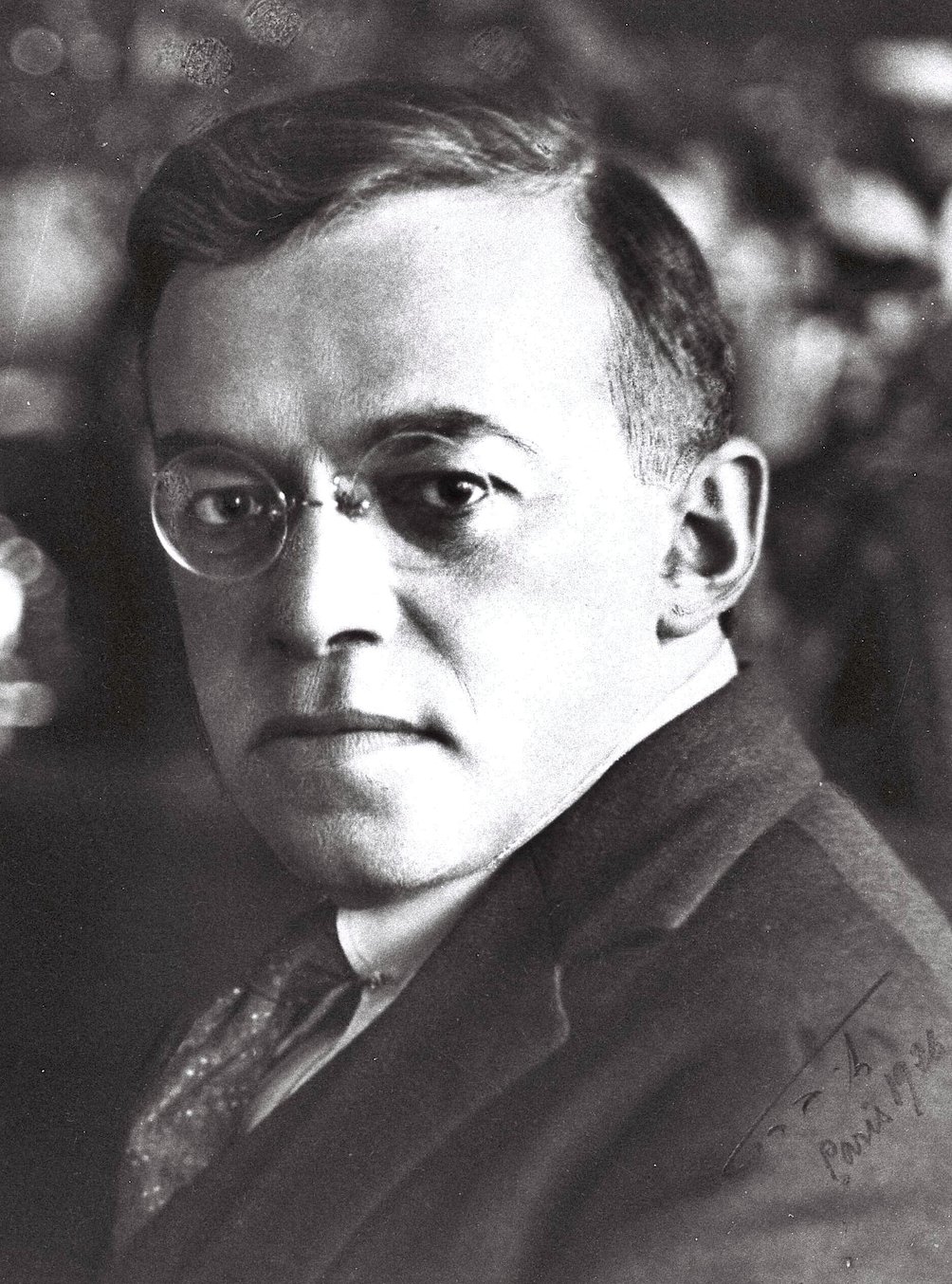
There are historical texts that deserve to be read not only for what they say, but also for what they reveal unintentionally. The Iron Wall (We and the Arabs), published by Ze’ev Jabotinsky in November 1923, is one of them.
Jabotinsky was one of the principal ideologues of revisionist Zionism, a political movement that advocated the establishment of a Jewish state with a Jewish majority in Palestine and that assigned a central role to military force in achieving that goal. His essay constitutes an especially significant source for studying how certain sectors of Zionism understood the relationship between the colonization project and the Palestinian Arab population.
What makes this document particularly revealing is that Jabotinsky does not attempt to deny that Palestine was inhabited, nor does he present Palestinian resistance as an inexplicable phenomenon. On the contrary, he recognizes that the native population had reasons to oppose a project that intended to transform the demographic and political composition of their territory.
And to explain that opposition, he resorts to a historical precedent that, from our Latin American perspective, is impossible to ignore: the conquest of America.
Key historical quote (Jabotinsky, 1923):
"Any native population in the world resists colonizers as long as it retains even a faint hope of being able to rid itself of the danger of being colonized. That is what the Arabs in Palestine are doing, and what they will continue to do as long as a spark of hope remains."
1. A COMPARISON THAT CUTS ACROSS THE COLONIAL HISTORY OF AMERICA
In one of the central passages of his essay, Jabotinsky proposes that his readers recall the background of colonization in other territories and asks whether there is any case in which a native population has voluntarily accepted being colonized.
His answer is categorical: no such precedent exists.
To develop his argument, he mentions the companions of Hernán Cortés and Francisco Pizarro, conquerors of the territories we know today as Mexico and Peru. He describes them as men who behaved like bandits.
However, he introduces a second comparison: the so-called Pilgrim Fathers, whom he presents as colonizers of elevated morality who, according to his interpretation, did not intend to harm the Indigenous peoples of North America and believed that there was sufficient space for both.
Jabotinsky's conclusion is that native populations resisted both the colonizers he considered violent and those he considered morally superior.
This observation deserves our pause.
The resistance of indigenous peoples did not depend on the good or bad intentions that the colonizers attributed to themselves. It depended on something much more elemental: they were arriving in territories that already had inhabitants, social structures, cultures, forms of organization, and historical ties to the land.
Jabotinsky understood that even a colonizer who considered himself benevolent remained a colonizer from the perspective of someone who saw their territorial sovereignty threatened.
From Latin America, this comparison acquires a particular historical dimension. Our memory is marked by European invasion, the appropriation of territories, the exploitation of resources, the imposition of power structures, and the resistance of indigenous peoples. The conquest was not an innocent encounter between cultures: it entailed violence, dispossession, and profound transformations in the lives of native societies.
However, it is important to note that the presentation of the Pilgrim Fathers as morally superior colonizers belongs to Jabotinsky's argument and does not constitute a neutral historical description. English colonization of North America also produced territorial dispossession, violence, and the displacement of indigenous peoples.
What is truly significant about his comparison is not the alleged goodness of some colonizers versus the brutality of others, but the recognition that the native population had no reason to accept the loss of its territory.
2. PALESTINE WAS NOT AN EMPTY TERRITORY
The comparison acquires greater depth when Jabotinsky transfers that reasoning to Palestine.
In his essay, he maintains that a voluntary agreement with the Palestinian Arabs could not be expected in order to transform Palestine—then a country with an Arab majority—into a territory with a Jewish majority.
Here a fundamental question arises: the project did not consist solely in permitting the immigration of Jewish individuals or establishing communities in the territory. Its political objective involved transforming the demographic composition and, subsequently, the power structure of the country.
Jabotinsky understood that Palestinians could identify the consequences of that process, even when its promoters presented it through discourses of progress, economic development, or coexistence.
In the text, he even acknowledges that Palestinian Arabs could not be easily deceived by promises of material benefits. They knew that the progressive establishment of a Jewish majority could lead to a Jewish government and their own conversion into a political minority.
This part of the essay is especially important because it questions an interpretation that still appears in numerous discourses: that Palestinian opposition to colonization was simply the product of prejudice, religious intolerance, or misunderstanding toward the Jewish people.
Jabotinsky recognized something else: the Palestinians understood the political objectives of the Zionist project and opposed losing control of their own territory. Resistance, therefore, did not arise from an ideological vacuum. It had a national and territorial dimension.
3. THE IRON WALL: WHEN RESISTANCE BECOMES AN OBSTACLE TO BE OVERCOME
Up to this point, one might think that Jabotinsky's recognition constitutes a critique of colonialism. However, his political conclusion is the exact opposite.
After acknowledging that no native population voluntarily accepts being colonized, he maintains that the Zionist project had to continue regardless of the will of the Palestinian inhabitants.
It is there that he introduces his best-known concept: the "iron wall".
The metaphor represents a military and political power structure strong enough to prevent the Palestinian population from stopping the advance of colonization.
Jabotinsky argued that this wall could be composed of Jewish soldiers or British forces. In fact, he considered that the British Mandate and the Balfour Declaration provided essential external backing to guarantee the conditions under which the Zionist project could develop.
His reasoning was that only when the Palestinian population understood that it could not defeat that power would it abandon the hope of preventing the transformation of Palestine.
In other words, agreement should not precede the imposition of the project: it should arrive after resistance had been neutralized.
Here lies the most important political contradiction of the document.
Jabotinsky recognizes that Palestinians defend their land for the same reasons that other native peoples defended their territories against colonizers. However, he does not interpret that resistance as a moral warning about the illegitimacy of dispossession. He interprets it as a difficulty that must be resolved through military superiority.
That is to say, he understands the logic of colonized peoples, but does not renounce the project that provokes their resistance.
4. THE CONTRADICTION BETWEEN EQUALITY AND DOMINATION
There is another aspect of the essay that deserves attention.
Jabotinsky begins by rejecting the idea that his project necessarily implies expelling the entire Arab population. He even asserts that two peoples can exist in Palestine, provided that Jews come to constitute the majority.
He also invokes equal rights and mentions the Helsingfors Program, relating to the national rights of minorities.
However, that apparent defense of coexistence is conditioned by a premise: the demographic and political transformation of Palestine had to be carried out independently of the consent of its majority population.
The question that arises is inevitable: can one speak of coexistence between equals when one of the parties intends to modify the political structure of a territory in the face of opposition from those who already inhabit it?
Subsequent legal equality does not automatically eliminate the conditions of domination that made that transformation possible.
This does not mean that we should erase the contradictions in Jabotinsky's thought or attribute positions to him that he did not hold in 1923. His political trajectory was more complex and underwent subsequent changes. However, it does allow us to identify a fundamental tension between his recognition of the rights of the Arab population and his defense of a project that had to be imposed even without their consent.
5. LATIN AMERICA AND PALESTINE: A SHARED ANTI-COLONIAL MEMORY
Why should we study this essay from Paraguay and Latin America?
Because the history of our peoples provides us with tools to recognize the consequences of territorial domination projects.
The European colonization of America left deep marks: land dispossession, economic exploitation, destruction of political structures, cultural imposition, and the hierarchization of populations. Indigenous peoples resisted because they were not accidental inhabitants of those territories: they were societies with history, identity, organization, and the right to exist.
This memory must not become a simplistic comparison. The Spanish conquest of America, the English colonization of North America, and the Zionist project in Palestine belong to different historical contexts. They are neither identical processes nor can they be explained through a single formula.
But it is possible to study their mechanisms of domination: territorial expansion, the subordination of native populations, the transformation of power structures, and the justification of those processes through political and civilizational discourses.
Latin American thought on coloniality, particularly the contributions of Aníbal Quijano, allows us to deepen this reading. Quijano explains how the power structures originating during the conquest of America survived colonial administration and continued to organize social, economic, and cultural relations long after the formal independence of the territories.
This perspective invites us to understand that colonialism is not merely an event of the past. It can also be studied as a structure of power relations that produces hierarchies, determines who has authority over a territory, and conditions which populations can decide their own future.
Therefore, reading The Iron Wall from Latin America does not consist in appropriating a foreign history, but in recognizing a question that also cuts across our own history: who has the right to decide the destiny of a territory and the peoples who inhabit it?
6. A 1923 TEXT FACING A SUBSEQUENT HISTORICAL REALITY
The creation of the State of Israel in 1948, the Palestinian Nakba—the expulsion and mass displacement of the Palestinian population during that process—and the subsequent occupation of Palestinian territories constitute events that must be studied in their respective historical contexts.
It would not be rigorous to claim that the 1923 essay alone explains everything that happened afterwards, nor that every Israeli policy constitutes a literal application of his propositions.
However, neither would it be correct to ignore the importance of his ideas in the tradition of revisionist Zionism and in subsequent debates on the relationship between military power, security, and the Palestinian population.
Historian Gil S. Rubin, in research published in The Historical Journal, also warns about the evolution of Jabotinsky's thought: he documents that, by 1939, Jabotinsky began to contemplate the transfer of the Palestinian Arab population, a position that contrasted with some of his earlier propositions regarding minority rights (Rubin, 2019).
This precision is important because it allows us to study his thought without turning him into a static figure or simplifying his contradictions.
What remains a central question is that, as early as 1923, Jabotinsky had explicitly formulated a relationship between colonization, native resistance, and military superiority.
7. THE QUESTION LEFT TO US BY THE IRON WALL
There is something profoundly revealing in the fact that one of the main ideologues of revisionist Zionism recognized that no people voluntarily accepts losing dominion over its land.
Jabotinsky understood that Palestinian resistance was not an anomaly. It was a predictable response from a population that did not want to become subordinate to a political project developed on its territory.
But, instead of asking whether that project should be stopped, he asked how to ensure it continued despite the resistance.
That is the contradiction we must examine.
From our Latin American memory, we know that indigenous peoples did not need to prove they were sufficiently civilized, peaceful, or accommodating to deserve the right to remain in their territories. Nor did they have to accept conquest to demonstrate their willingness to coexist.
Nor do Palestinians have to renounce their national identity, historical memory, or territorial rights for their existence to be recognized.
The resistance of a people against dispossession cannot be analyzed as if it were the original cause of the domination they suffer.
Perhaps the most important question left to us by The Iron Wall is not why Palestinians resist, but why it is expected that they stop doing so in order for a colonization project to advance.
The history of our peoples should have taught us that the resistance of the colonized is not the problem that must be resolved: it is an expression of their struggle to exist, remain, and decide their own future.
BIBLIOGRAPHY
- Jabotinsky, Z. (1923, November 4). The Iron Wall (We and the Arabs). Rassvet. Jabotinsky Institute Archive. en.jabotinsky.org
- Rubin, G. S. (2019). Vladimir Jabotinsky and population transfers between Eastern Europe and Palestine. The Historical Journal, 62(2), 495–517. doi.org/10.1017/S0018246X18000419
- Quijano, A. (2000). Coloniality of Power, Eurocentrism, and Latin America. In E. Lander (Comp.), The Coloniality of Knowledge: Eurocentrism and Social Sciences. Latin American Perspectives (pp. 201–246). CLACSO. biblioteca.clacso.edu.ar